
"coffee trade Hainan"
300 article(s) found

History of introduction and expansion of Coffee in China in the early stage of Coffee Development (5)
1. From the first peak period of the development of China's coffee industry (1952-1961) to the late 1940s, according to recorded figures, there are 2173.33 hectares of rubber plantations in Hainan Island, with a total of 867600 rubber trees, with an annual output of 199,000 tons of dry rubber, and more than 300,000 coffee plants. the annual output of coffee beans is 1 ton. According to a survey in the early 1950s, there was a large amount of coffee left in Fushan area of Chengmai County, with a total of 70,000.

The price of Yunnan coffee is Yunnan coffee expensive?
Professional coffee knowledge exchange more coffee bean information please follow the coffee workshop (Wechat official account cafe_style) in metropolises, tens of yuan a cup of coffee is rare. However, in Yunnan Province, the main coffee producing area in China, the purchase price of coffee beans is about 15 yuan per kilogram. According to the figures released by the Yunnan Coffee Association, enterprises bought from farmers during the 2015-2016 harvest season.
Ethiopia's admirable coffee country
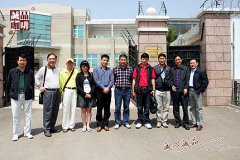
In the world of coffee, there are countless stories and reports about Ethiopia: the birthplace of coffee, the story of shepherds, the thought-provoking documentary Black Gold, and so on. None of the above is an important reason for our visit. This time, we of Guangzhou Coffee Association (Lin Guangchao, Vice President Lin Yaohui, Vice President Xiao Fei, Vice President Tang Jinqing and Mr. Liang Rengming) are in Ethiopia.

Coffee planting History of Coffee introduction and expansion in China in the early stage (5)
1. From the first peak period of the development of China's coffee industry (1952-1961) to the late 1940s, according to recorded figures, there are 2173.33 hectares of rubber plantations in Hainan Island, with a total of 867600 rubber trees, with an annual output of 199,000 tons of dry rubber, and more than 300,000 coffee plants. the annual output of coffee beans is 1 ton. According to a survey in the early 1950s, there was a large amount of coffee left in Fushan area of Chengmai County, with a total of 70,000.
Coffee knowledge
Coffee (scientific name: Coffea arabica), also known as coffee tree, Arabica coffee, etc., is the national flower of Yemen. Before the 6th century in the park, Yemen was called Arab, so the coffee trees transported from them to other places were also called Arabian coffee trees. The name coffee comes from the Arabic word "Qahwah", which means plant drink. Later, coffee spread all over the world.

The development and change of coffee!
1. Macro-environmental analysis with the development of the times and the further change of people's concept of life, the coffee industry is also developing at a rapid speed. The promotion of urbanization and the construction of culture are the driving force for the development of coffee shops. Government policy support for college students to start a business. With the popularity of coffee culture and the rise of petty bourgeoisie sentiment, coffee shops are becoming one of the ways for people to communicate and enjoy themselves.

The development and change of coffee!
1. Macro-environmental analysis with the development of the times and the further change of people's concept of life, the coffee industry is also developing at a rapid speed. The promotion of urbanization and the construction of culture are the driving force for the development of coffee shops. Government policy support for college students to start a business. With the popularity of coffee culture and the rise of petty bourgeoisie sentiment, coffee shops are becoming one of the ways for people to communicate and enjoy themselves.
The History of Coffee introduction and expansion in China in the early stage (5)
1. From the first peak period of the development of China's coffee industry (1952-1961) to the late 1940s, according to recorded figures, there are 2173.33 hectares of rubber plantations in Hainan Island, with a total of 867600 rubber trees, with an annual output of 199,000 tons of dry rubber, and more than 300,000 coffee plants. the annual output of coffee beans is 1 ton. According to a survey in the early 1950s, there was a large amount of coffee left in Fushan area of Chengmai County, with a total of 70,000.
Coffee producing area single coffee fine coffee culture China Coffee Trading Network Raw Bean Merchants
Coffee Origin Editor Africa Democratic Republic of the Congo: Kivu, Ituri Rwanda: Kivu Kenya: AA, Kenya AA Oreti Estate, Uganda: Elgon, Bugisu, Ruwensori Zambia: Kasama,

Coffee industry enters the upgrading period of processing equipment to meet innovation
Coffee industry to promote the development of equipment industry the active development of coffee industry will promote the development of coffee processing technology and equipment. Coffee processing generally includes peeling, fermentation, drying, baking, grinding and other steps. Among them, the most common step in life is grinding, and now coffee machines on the market have this effect. As far as the most common coffee machine is concerned, since the introduction of coffee culture to China

Where is it suitable for growing Coffee in China? performance of brewing flavor of small-grain coffee in Baoshan, Yunnan, China
Coffee has been grown in China for more than one hundred years, but it has not been long since it became a commodity. In the late 1980s, the area was as high as 270000 mu, including 210000 mu in Hainan, 50, 000 mu in Yunnan and more than 10, 000 mu in Guangdong, and some were planted in Fujian. Later, as the price of coffee beans fell, the growers had to change the coffee to other crops. The acreage began to decline in 1991

Fushan Coffee Town will develop into a tourist town
"Chengmai Fushan Coffee Culture Town Master Plan" review meeting said that "within ten years, Fushan Coffee Town will develop into a western tourism town in our province!"

A Summary of the Development History of Coffee in Yemen
Coffee scientific name: Coffea arabica), also known as coffee tree, Arabica coffee, etc., is the national flower of Yemen. Before the 6th century in the park, Yemen was called Arab, so the coffee trees transported from them to other places were also called Arabian coffee trees. The name coffee comes from the Arabic Qahwah, which means plant drink. Later, the coffee spread all over the world, and it was picked.

Coffee basic knowledge Coffee ranks first among the three largest drinks in the world.
It is the second largest trading commodity in the world (only after oil), and it is also an important raw material for medicine, food and light chemical industry. At present, the global coffee culture and drinking coffee are woody coffee, and mainly produced in Vietnam, Brazil, Colombia, Indonesia and other Central America, Africa, Asia and other regions near the equator. There are only a few in subtropical areas such as Yunnan and Hainan in China.
The development and change of coffee!
With the development of the times and the further change of people's concept of life, the coffee industry is also developing at a rapid speed. The promotion of urbanization and the construction of culture are the driving force for the development of coffee shops.
Analysis on the Development Environment and advantages of Coffee Industry in Yunnan Province
Analysis on the development of coffee consumption at home and abroad from an international point of view, the world is in a trend of steady growth.

The origin of the word "coffee" in the basic knowledge of coffee
Coffee (scientific name: Coffea arabica), also known as coffee tree, Arabica coffee, etc., is the national flower of Yemen. Before the 6th century AD, Yemen was called Arabian, so the coffee trees shipped from them to other places were also called Arabian coffee trees. The name coffee comes from the Arabic Qahwah, which means plant drink. Later, the coffee spread all over the world, and it was picked.
Basic knowledge of Fine Coffee an overview of the history of Yemeni coffee
Coffee scientific name: Coffea arabica), also known as coffee tree, Arabica coffee, etc., is the national flower of Yemen. Before the 6th century in the park, Yemen was called Arab, so the coffee trees transported from them to other places were also called Arabian coffee trees. The name coffee comes from the Arabic Qahwah, which means plant drink. Later, the coffee spread all over the world, and it was picked.
World-famous individual coffee beans and their origin China Coffee net China Coffee Trading Network Latin America
Introduction] Latin American coffee beans (Central and South America) middot; Brazil: Santos (Santos), Bahia (Bahia), Syrador (Cerrado), Mojiana (Mogiana) middot; Mexico: Coatepec, Huatusco, Orezaba (Orizab Latin American coffee beans (Central and South America) Brazil

The owner of Boao Cafe started a Business
Witness the Boao decade from April 14 to 16 this year, the paradise town of Boao will usher in the 10th annual meeting of the Boao Forum for Asia. Ten years ago, even in Hainan Province, not many people knew about the small fishing village of Boao. Ten years later, Boao has become a resounding forum for Asia.